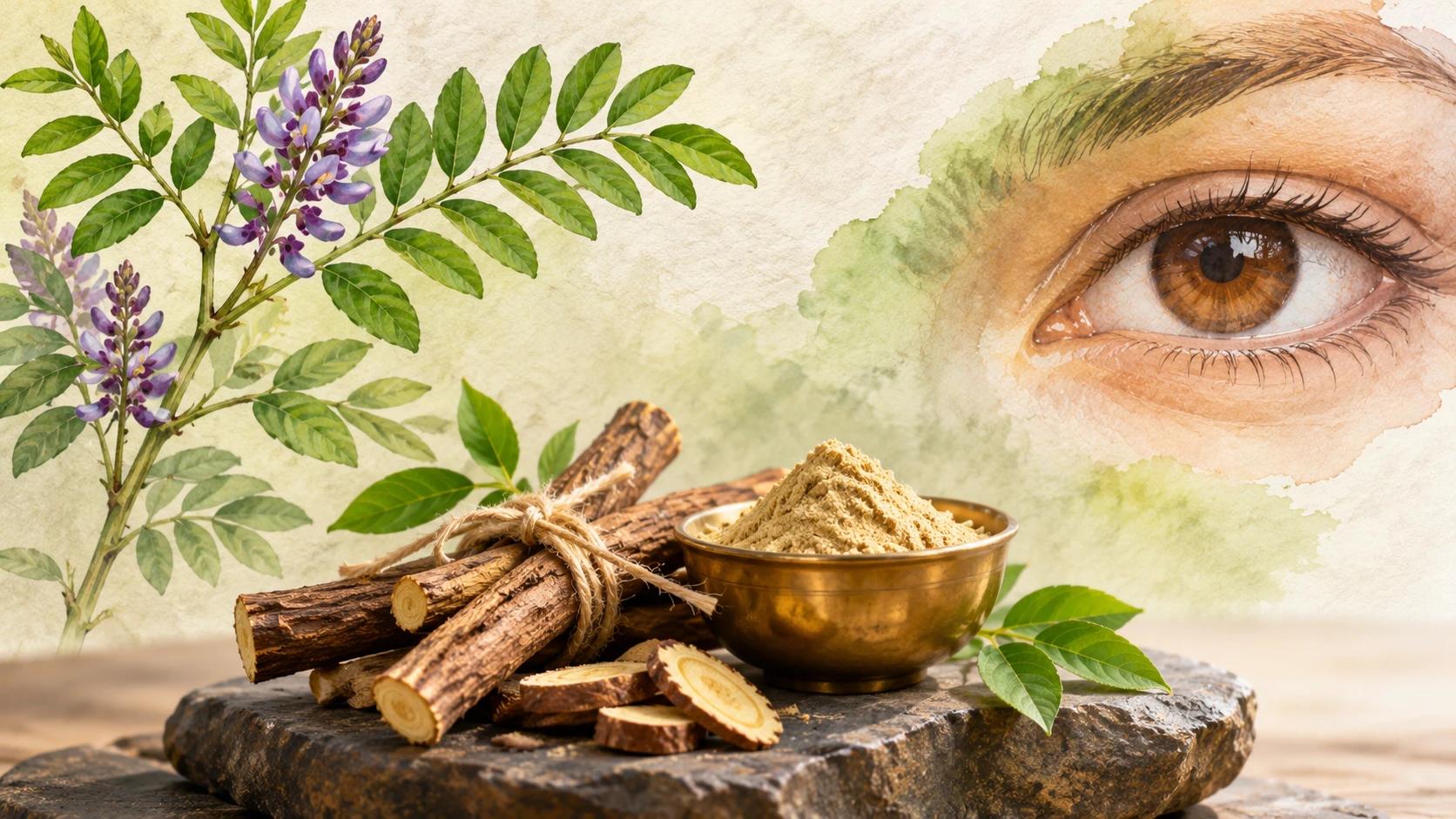
Nature's Sweet Healer: How Yashtimadhu Supports Eye Health
Discovering the traditional power of Licorice root (Glycyrrhiza glabra) for modern vision care.
When we think of natural remedies for vision and eye care, bright yellow carrots or rich leafy greens often come to mind. However, traditional Ayurvedic medicine has long celebrated another powerhouse herb for eye health: Yashtimadhu (Glycyrrhiza glabra), commonly known across the world as Licorice root.
Known in Sanskrit as Yashtimadhu, which translates directly to "sweet stem", this ancient botanical offers far more than just a soothing taste. In Ayurveda, it is classified as a Chakshushya herb, an honorific title reserved for natural substances that nourish, protect, and enhance eyesight.
What is Yashtimadhu? A Botanical Overview
Yashtimadhu is a perennial herbaceous plant belonging to the pea family (Fabaceae). Native to Western Asia, North Africa, and Southern Europe, it thrives in warm climates and well-drained soils.
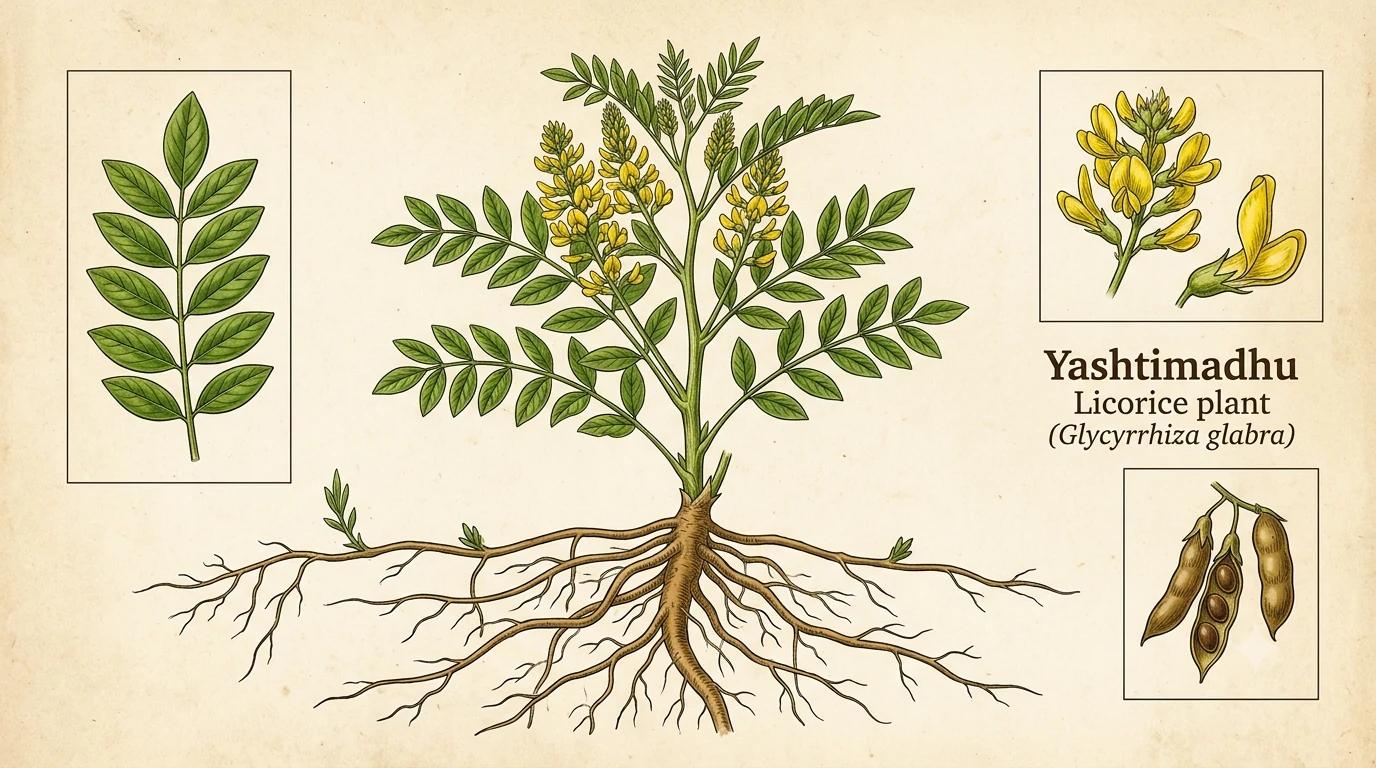
- Leaves & Flowers: Grows up to 1 meter tall, adorned with pinnate leaves containing several leaflets and delicate pale violet to purple-blue flowers.
- The Root System: While the foliage is attractive, the real therapeutic value lies beneath the soil in its extensive underground roots and stolons.
- Sweet Profile: Contains glycyrrhizin, a compound 50 times sweeter than sucrose.
Traditional Eye Health Benefits of Yashtimadhu
In Ayurveda, Yashtimadhu is traditionally valued for the eyes in the following ways. These are traditional uses: clinical evidence in people is limited, and the research that exists has studied specific formulations (such as a glycyrrhizin eye solution) rather than licorice root, tea, or home remedies in general.
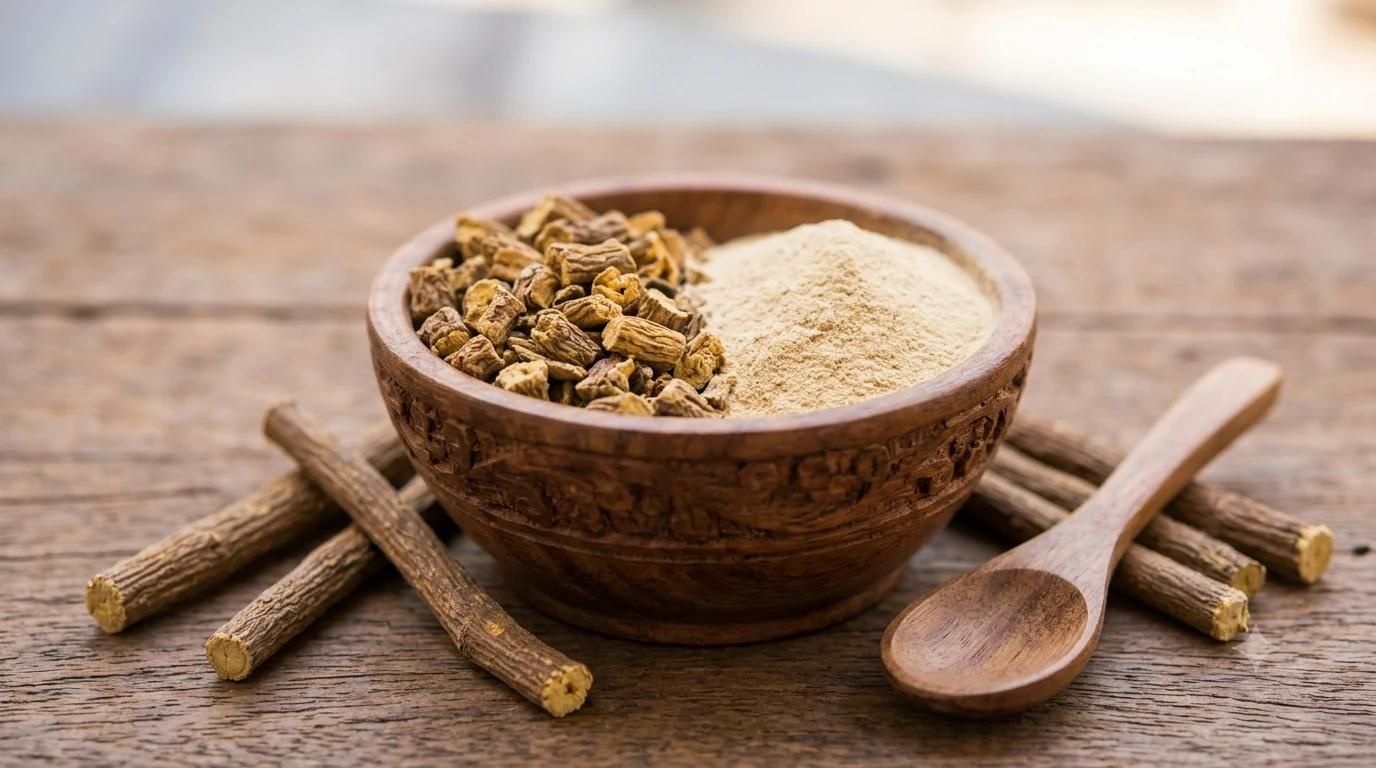
1. Traditionally Used for Dryness & Screen Strain
Ayurveda regards Yashtimadhu as demulcent (soothing) and moistening, and traditionally uses it to ease dry, tired eyes, such as the fatigue that follows long hours of screen use.
2. Anti-Inflammatory Properties
Compounds like glycyrrhizin have shown anti-inflammatory activity in laboratory research, which is why the herb is traditionally used to soothe redness and irritation around the eyes.
3. Antioxidant Compounds
Yashtimadhu contains flavonoids like glabridin, which show antioxidant activity in laboratory studies. Whether this offers any protection to the human eye has not been established.
Classical Applications & Traditional Use
Ayurvedic practice incorporates Yashtimadhu into several classic applications:
- Yashtimadhu Ghrita: Clarified butter infused with licorice root, traditionally used in specialized ocular therapies (Netra Tarpana) prepared and administered by trained practitioners in a clinical setting, or taken internally to nourish tissues.
- Historical Eye Washes: Classical Ayurvedic texts describe licorice infusions for washing the eyes. This is described for historical context only; homemade or filtered infusions are not sterile and should never be put in the eyes.
- Herbal Teas: Traditionally sipped as a mild tea to help balance Pitta dosha (the thermal energy associated with eye heat and inflammation).
Safety Note: Never put homemade, raw, or non-sterile licorice preparations in your eyes; anything used in the eye must be sterile, because contamination can cause serious eye infections. Taken internally, licorice can raise blood pressure, lower potassium levels, and interact with medicines such as blood-pressure drugs, diuretics, corticosteroids, and heart medicines. Avoid it if you are pregnant or have high blood pressure, heart disease, or kidney disease, and do not take it in large amounts or for more than a few weeks without medical advice. Always consult your doctor, as well as a qualified Ayurvedic practitioner, before using Yashtimadhu, and see an eye doctor for any persistent eye symptoms.