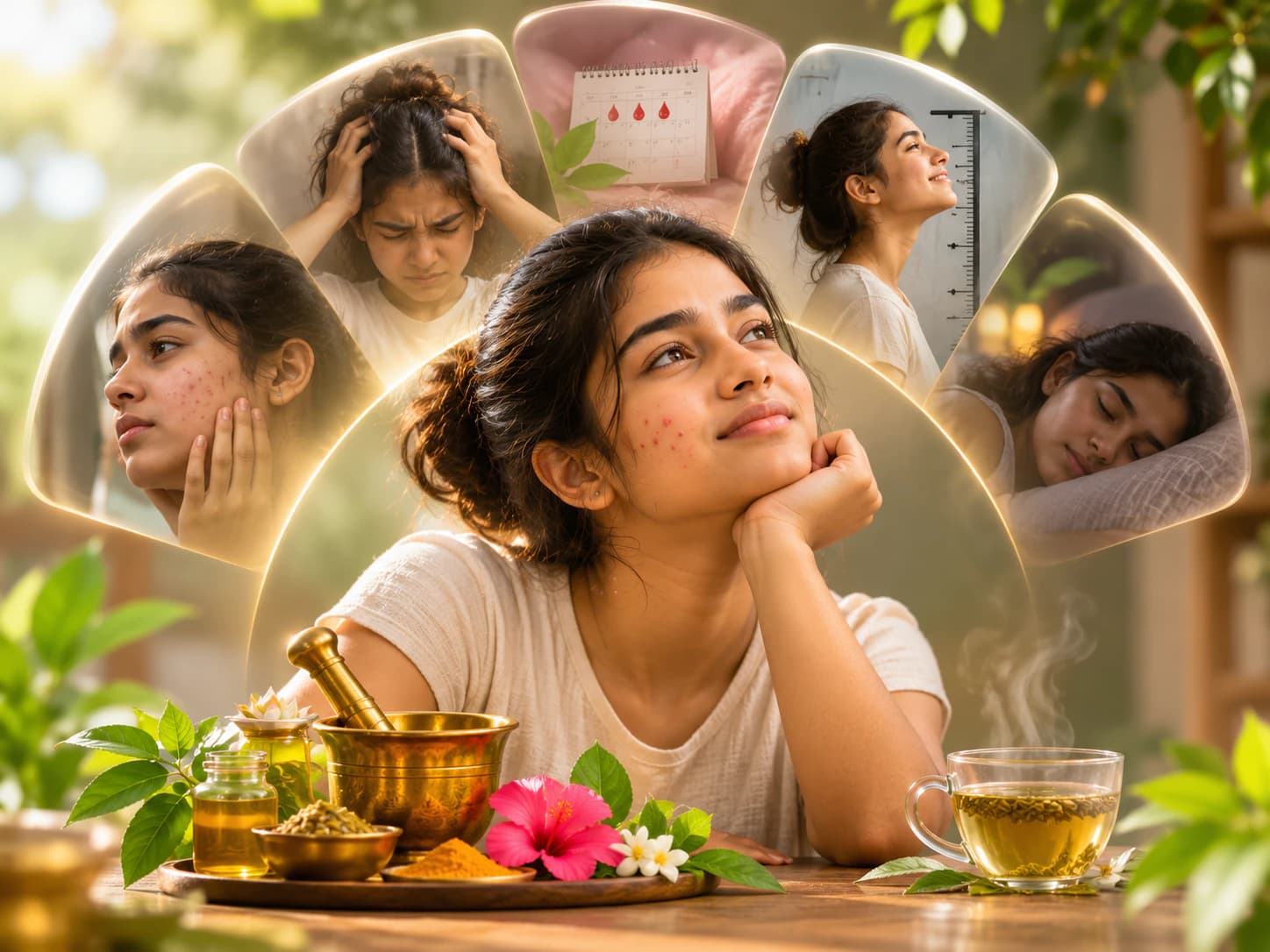
Blossoming with Balance: Navigating Puberty with Ayurvedic Wisdom
Thirteen-year-old Maya stood before the mirror, staring at her reflection in frustration. Over the past few months, it felt like her body was undergoing a quiet rebellion. Her legs had grown longer almost overnight, unexpected skin breakouts kept appearing, and her mood shifted unpredictably from vibrant energy to sudden, quiet fatigue.
Noticing her distress, her mother gently sat down beside her.
"I feel like my body is out of my control," Maya admitted softly.
Her mother offered a reassuring smile. "You aren't losing control, Maya. This is called puberty."
Understanding Puberty Through Ayurveda
In Ayurveda, puberty is recognized as a profound transition stage, a Ritu Sandhi (junction of seasons) between childhood and adulthood. During this phase, two primary biological energies (Doshas) experience a significant natural surge:
- Vata Dosha: Governs movement, rapid growth, bone development, and the nervous system. When Vata surges, it can manifest as growth spurts, fluctuating energy, restless sleep, and emotional vulnerability.
- Pitta Dosha: Governs metabolism, transformation, enzymatic activity, and hormones. An increase in Pitta manifests as internal body heat, heightened metabolism, increased sweating, skin breakouts (acne), and intense emotions or temperamental shifts.
When these energies are recognized and supported through appropriate lifestyle choices, puberty shifts from an uncomfortable ordeal into a balanced, healthy biological progression.
Ayurvedic Guidelines for an Easy Puberty: Do's & Don'ts
1. Dietary & Nutritional Habits
Diet serves as the foundation for building strong tissues (Dhatus) and regulating hormonal activity during adolescence.
| Category | Do's (Recommended) | Don'ts (To Avoid) |
|---|---|---|
| Meal Quality | DO consume warm, freshly cooked, and easy-to-digest meals. Include small amounts of pure ghee to ground Vata and nourish developing tissues. | DON'T rely on cold, raw, or dry foods (like dry snacks or cold salads), which Ayurveda considers aggravating for Vata. |
| Hydration | DO sip warm or room-temperature water. Drinks like cumin-coriander-fennel (CCF) tea or mint tea help clear internal heat and aid digestion. | DON'T consume carbonated sodas, iced drinks, or excessive sugary energy drinks, which weaken the digestive fire (Agni). |
| Snack Choices | DO incorporate naturally cooling, sweet foods such as soaked and peeled almonds, dates, sweet juicy fruits (pears, melons), and fresh coconut water. | DON'T overindulge in excessively spicy, deep-fried, or overly salty packaged foods, as these stoke Pitta heat, worsening acne and body heat. |
2. Lifestyle & Daily Routine (Dinacharya)
A structured daily routine stabilizes the nervous system and supports endocrine health during periods of rapid growth.
| Category | Do's (Recommended) | Don'ts (To Avoid) |
|---|---|---|
| Sleep Schedule | DO maintain a consistent sleep schedule (8–10 hours nightly for teens). Sleeping before 10:00 PM calms Vata and supports optimal hormonal regulation. | DON'T stay up late engaging with electronic screens. Late nights inflame both Vata and Pitta, causing fatigue, brain fog, and skin issues. |
| Body Care | DO practice Abhyanga (warm oil massage), which helps calm the nervous system and relieve pain and discomfort. (Not recommended during menstrual cycles.) | DON'T push through severe physical exhaustion. Honor the body's need for extra rest during growth spurts or menstrual cycles. |
| Emotional Balance | DO channel shifting emotions into creative or physical activities like journaling, art, sports, or simple deep-breathing exercises (Pranayama). | DON'T bottle up feelings or judge natural mood fluctuations, which are standard physiological responses to hormonal shifts. |
3. Natural Skincare Practices
Hormonal skin changes are best managed using gentle, cooling remedies.
- DO cleanse the face using a natural, mild paste made of chickpea flour (besan), rose water, and a tiny pinch of turmeric to clear excess oil without drying out the skin barrier. Turmeric can cause skin allergies in some people, so patch-test the paste on your inner arm first and stop using it if you notice redness, itching, or irritation.
- DON'T squeeze or pick at acne, and avoid harsh abrasive chemical exfoliants, which can spread skin inflammation and lead to scarring.
Growing Up with Balance
By viewing puberty through an Ayurvedic framework, emphasizing warm nourishment, consistent daily rhythms, and gentle cooling practices, teenagers can navigate this developmental stage with physical vitality, emotional stability, and ease.